
Asbestos & mesothelioma
Who Is at Risk? Illinois Job Sites and Trades Linked to Asbestos Exposure
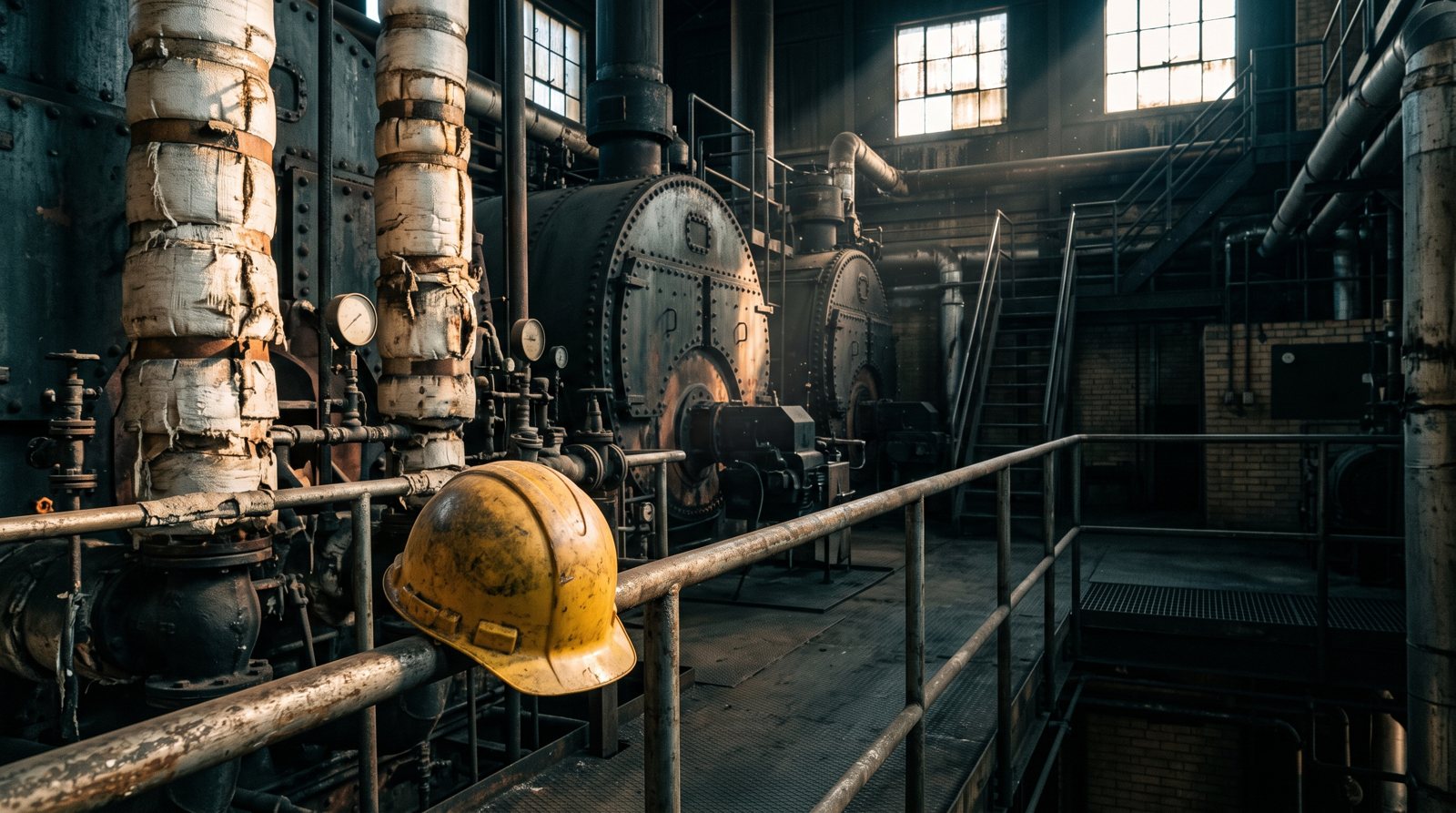
Asbestos was prized for one reason: it does not burn. That made it the default insulation for anything hot, and it put generations of Illinois tradespeople in daily contact with a fiber that causes cancer decades later. Here is where exposure most commonly happened, and who should be paying attention to their health today.
Trades with the heaviest exposure
- Insulators and pipe coverers mixed, cut, and applied asbestos insulation by hand.
- Pipefitters, steamfitters, and boilermakers removed and replaced insulation, gaskets, and packing on boilers, turbines, and steam lines.
- Electricians and millwrights worked in the same spaces, often disturbing insulation to reach equipment.
- Auto and truck mechanics ground and blew out asbestos brake and clutch dust.
- Construction workers, drywallers, and roofers sanded joint compound, cut cement board, and handled roofing and flooring products.
- Laborers and maintenance staff swept up, tore out, and cleaned dusty work areas.
- Navy veterans and shipyard workers lived and worked in tight spaces lined with asbestos insulation.
Illinois industries and job sites
Central Illinois and the Metro East were, and remain, industrial regions. Workplaces commonly associated with asbestos exposure include:
- Oil refineries and chemical plants along the Mississippi River corridor in the Metro East.
- Steel mills, foundries, and heavy manufacturing plants.
- Coal-fired power plants and utility generating stations throughout the state.
- Railroad yards and locomotive shops, where asbestos lined boilers, brakes, and cab insulation.
- Grain elevators, food processing, and ethanol and agricultural manufacturing facilities.
- Schools, hospitals, universities, and government buildings with steam heating and boiler rooms.
- Residential and commercial construction and demolition sites from the 1940s through the early 1990s.
Exposure also occurred at countless smaller sites: a body shop, a hardware store that sold insulation, a farm shop where brakes were serviced. If you are unsure whether a workplace used asbestos, a records review can often answer the question.
Secondary and household exposure
Asbestos fibers travel. Workers carried dust home on clothing, hair, and skin. Spouses who shook out and laundered work clothes, and children who greeted a parent at the door, breathed the same fibers. Illinois courts have recognized secondary exposure claims in appropriate circumstances, and these family members deserve the same careful evaluation as the worker.
What to watch for
Asbestos-related illness can begin with symptoms that are easy to dismiss: shortness of breath, a persistent dry cough, chest or abdominal pain, unexplained weight loss, or fluid buildup around the lungs. Anyone with a history in the trades or industries above should tell their doctor about it so that screening can be considered. Early diagnosis expands treatment options.
Talk with us
If you or a family member worked in one of these settings and has received a diagnosis of mesothelioma, asbestosis, or lung cancer, Brandenburg & Rees offers a confidential preliminary review. Call (217) 854-2602 or send a brief message. Representation availability will be discussed with you directly.
Common questions
Which jobs had the highest asbestos exposure?
Insulators, pipefitters, boilermakers, steamfitters, electricians, millwrights, shipyard workers, and auto mechanics who serviced brakes and clutches were among the most heavily exposed trades. Many laborers and maintenance workers were exposed as bystanders.
I never worked with asbestos. Could I still have been exposed?
Yes. Family members were exposed through dust carried home on clothing, and people who worked near insulation, demolition, or boiler work were exposed as bystanders even if they never handled the product.
Was asbestos used in Central Illinois workplaces?
Yes. Refineries, steel and manufacturing plants, power plants, railroads, grain processing, schools, hospitals, and construction sites across Central Illinois and the Metro East used asbestos-containing materials for decades.
This article provides general information about Illinois law and is not legal advice. Reading it does not create an attorney-client relationship with Brandenburg & Rees, LLP. Laws change and every situation is different; consult an attorney about your specific circumstances.