
Auto accidents
Rural Road and Farm Vehicle Accidents in Central Illinois: What Drivers and Farm Families Should Know
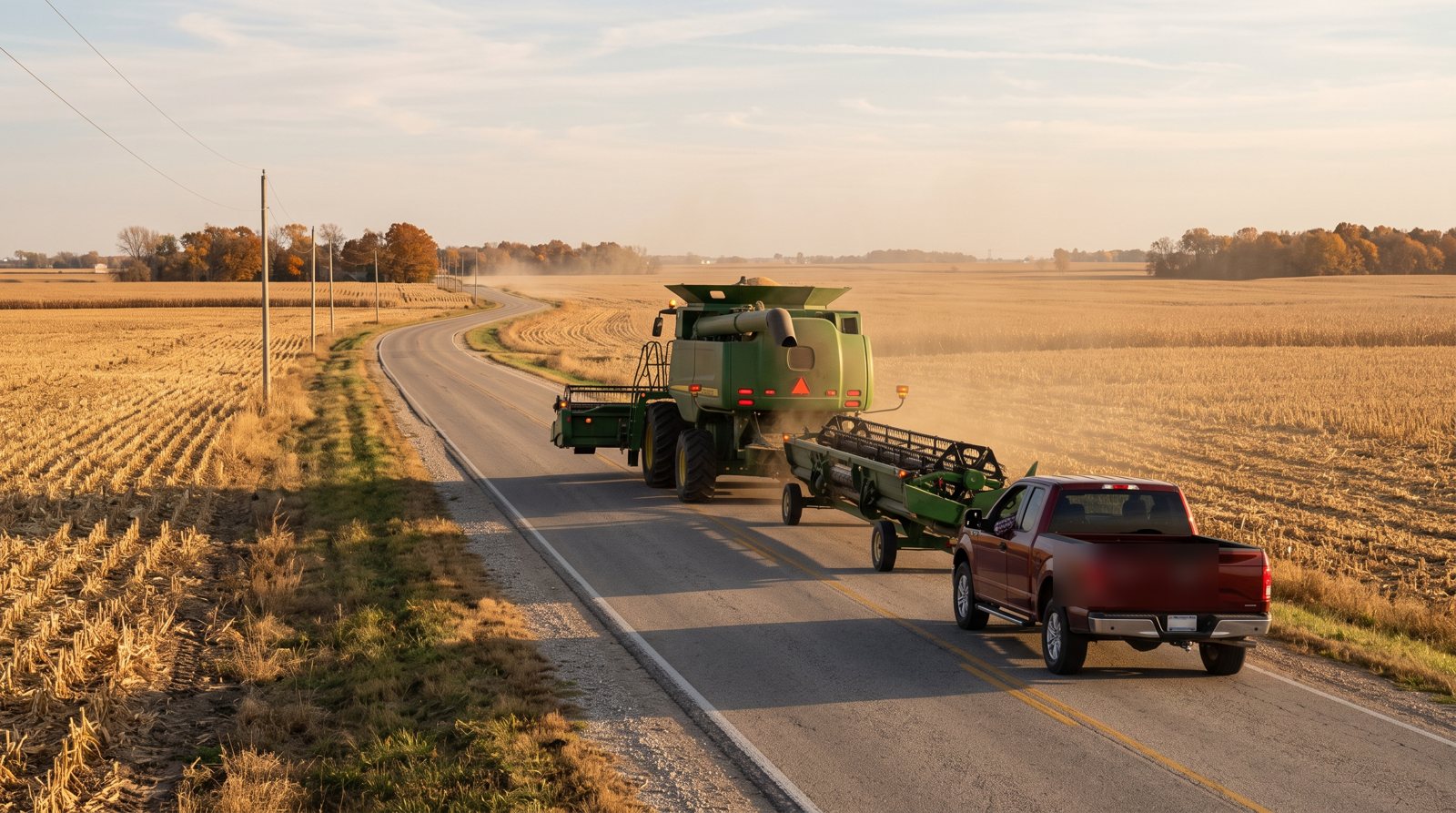
Most of the miles our clients drive are on two-lane county roads, state routes, and township blacktops, not interstates. Those roads carry combines in October, grain trucks all fall, school buses every morning, and deer at dusk. They are also where the most serious crashes in our region happen.
Why rural roads are more dangerous than they look
- Speed and geometry. Posted limits of 55 on narrow roads with no shoulders, hidden driveways, and unmarked intersections leave little margin for error.
- Slow-moving equipment. A car traveling 55 closes on a tractor doing 15 in a few seconds. Rear-end and passing collisions with farm equipment peak during planting and harvest.
- Unprotected intersections. Many county road crossings have only a stop sign on one leg, sometimes obscured by corn at the height of the season.
- Response time. Volunteer departments and long ambulance runs mean injuries that would be survivable in town can be fatal on a township road.
- Impairment and fatigue. Late-night drives home on empty roads produce a disproportionate share of fatal single-vehicle and head-on crashes.
Illinois rules for farm equipment on public roads
Illinois allows implements of husbandry on public roads, with conditions. Equipment must display the orange triangular slow-moving vehicle emblem, and equipment operated between sunset and sunrise must have proper lighting, including amber flashing lights where required. Wide equipment must be escorted or marked in some circumstances. Operators must yield where practical to allow traffic to pass and may not obstruct traffic longer than necessary.
Drivers, for their part, must not pass in a no-passing zone, must not pass equipment that is signaling a left turn into a field entrance, and must keep a following distance that allows for a sudden stop. A great many "tractor accidents" are actually a following driver who did not recognize how quickly they were closing.
Deer, livestock, and other rural hazards
A collision with a deer is usually a claim on your own comprehensive coverage, not a liability claim. A collision with livestock loose on the road is different: Illinois law addresses animals running at large, and an owner who failed to maintain fencing or allowed animals onto a road may be responsible. Road defects, missing signs, and washed-out shoulders can create claims against a county or township, which carry a one-year deadline and strict notice rules.
After a rural crash
- Call 911 and give a precise location, such as the nearest intersection of named roads or a fire number. Response time is the biggest variable in rural crashes.
- Photograph the scene before it changes. Farm equipment moves, corn gets picked, and skid marks fade.
- Get names. Rural crashes often have one witness: the farmer in the next field or the neighbor who came to help.
- Get checked out even if you drove away. Delayed treatment is the first argument every insurer makes.
- Do not give the other driver's insurer a recorded statement before speaking with a lawyer.
How we help
We have handled crashes on the county roads of Macoupin, Montgomery, Sangamon, and Madison Counties for years. We know which intersections have sight-line problems, which insurers cover the local grain and trucking operations, and how to document a case where there were no cameras and few witnesses. Call (217) 854-2602 or request a free consultation. Injury cases carry no fee unless we recover for you.
Common questions
Who is at fault when a car hits farm equipment on the road?
It depends on the facts. Farm equipment on public roads must display a slow-moving vehicle emblem and proper lighting, and the operator must follow the rules of the road. Drivers behind equipment must keep a safe distance and pass only where it is legal and safe. Fault is often shared, and Illinois reduces a recovery by the injured person's share.
Are rural crashes handled differently from city crashes?
The law is the same, but the practical issues differ: longer emergency response times, fewer witnesses, unlit roads, and insurers who argue speed or inattention because there was "nothing else out there." Prompt investigation and documentation matter even more.
What if the crash involved a county or township road defect?
Claims against a county, township, or road district carry a one-year deadline and specific notice rules. Contact an attorney immediately if a missing sign, washed-out shoulder, or unmarked hazard contributed to the crash.
This article provides general information about Illinois law and is not legal advice. Reading it does not create an attorney-client relationship with Brandenburg & Rees, LLP. Laws change and every situation is different; consult an attorney about your specific circumstances.